Idaho State Guide
Aboveground Storage Tank Requirements in Idaho
A buyer's overview of SPCC, fire code, and permitting considerations for aboveground fuel tanks in Idaho — before you specify a system.
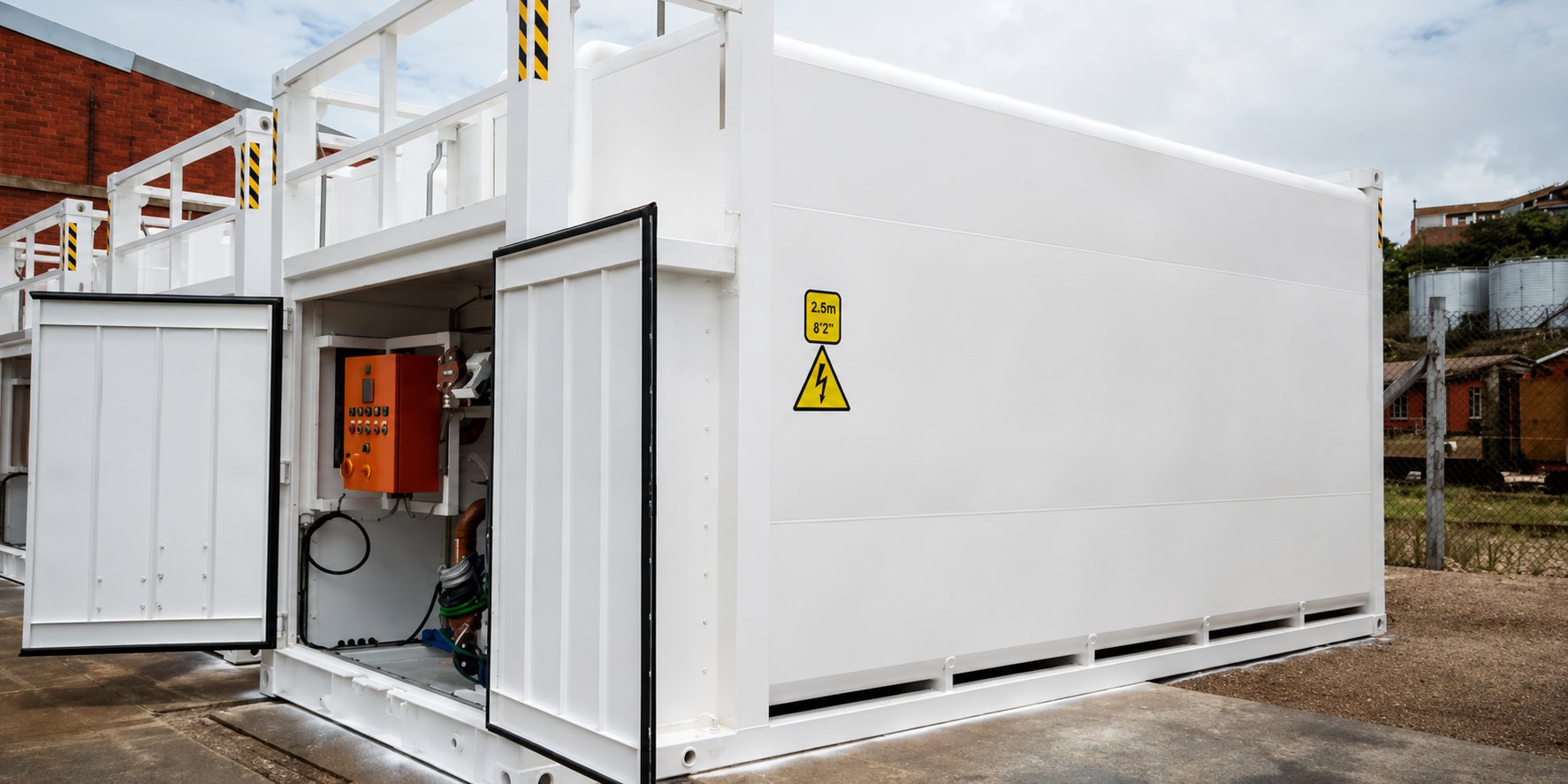
Federal SPCC baseline
The federal SPCC rule (40 CFR Part 112) applies to non-transportation-related facilities storing oil aboveground above regulatory thresholds. As a general rule, a facility with more than 1,320 gallons of aggregate aboveground oil storage capacity — counting every container 55 gallons or larger — falls within SPCC's scope. Facilities that trigger SPCC must develop a written Spill Prevention, Control, and Countermeasure Plan, meet secondary containment requirements, and in many cases certify the plan through a licensed Professional Engineer.
In Idaho specifically, SPCC carries more weight than in most other states in your territory — it's essentially the primary regulatory framework for petroleum ASTs, not one layer among several.
Idaho's regulatory approach is lighter at the state level
Idaho takes a notably different approach than its neighbors: the Idaho Department of Environmental Quality does not directly regulate petroleum ASTs. Petroleum ASTs in Idaho are regulated primarily by the EPA under the federal SPCC rule, with Idaho DEQ's role limited to requiring notification within 24 hours if a petroleum or hazardous substance release occurs (IDAPA 58.01.02, sections 851-852). Hazardous waste ASTs and used-oil ASTs fall under a separate DEQ Hazardous Waste Program track.
That doesn't mean Idaho installations are lightly regulated overall — it means the regulatory weight sits with the federal SPCC rule and with local fire districts, cities, and counties, which may layer on their own AST ordinances or best-management-practice requirements. The Idaho State Fire Marshal's office is a useful starting point for confirming which local authority has jurisdiction over your specific site.
Why local jurisdiction matters more in Idaho
Because there's no single statewide AST permitting office driving requirements the way Oregon's State Fire Marshal does, buyers in Idaho need to confirm requirements directly with whichever fire district, city, or county has jurisdiction over the installation site — rural and unincorporated sites in particular can fall to a county fire district with its own adopted code edition and review process. This is especially relevant across your territory given how much of Idaho's industrial and agricultural activity sits outside incorporated city limits. Don't assume the process that applied to your last Idaho installation applies to the next one if it's in a different district.
Common mistakes we see in Idaho projects
Assuming Idaho DEQ regulates ASTs the way neighboring states' environmental agencies do — it doesn't for petroleum ASTs; SPCC and your local fire authority carry the real weight.
Not confirming which fire district or county has jurisdiction before finalizing a site plan, especially on rural or unincorporated land where district boundaries aren't obvious.
Underestimating aggregate capacity across multiple tanks and missing the 1,320-gallon SPCC threshold, since Idaho has no separate state-level flag to catch that oversight.
Forgetting the 24-hour DEQ release notification requirement, which applies regardless of whether your facility triggers SPCC.
Typical permitting process
Confirm applicability — determine SPCC thresholds and identify which fire district, city, or county has jurisdiction over your site.
Site & tank design review — siting, setbacks, secondary containment, and UL 142 double-wall construction, sized to your operation.
Permit submission — application to the local fire authority per their adopted code.
Inspection & commissioning — local fire authority final inspection, tank commissioning, and SPCC plan certification if applicable.
Requirements vary significantly by local jurisdiction in Idaho. Confirm current requirements with your local fire district and the Idaho State Fire Marshal's office.
Quick Facts — Idaho
Environmental Agency
Idaho DEQ (does not directly regulate petroleum ASTs)
Fire Code
Locally adopted, varies by fire district/county
SPCC Trigger
Federal threshold (40 CFR 112) — primary framework in Idaho
Notable
24-hour release notification to DEQ required (IDAPA 58.01.02)
Regional Demand Drivers
Agriculture, mining, food processing
Sourcing a tank for an Idaho facility?
Get sizing options and compliance guidance specific to your site below.
Request a Quote
Get Idaho-specific tank guidance
We'll follow up with sizing options, lead times, and compliance guidance for your site.
FAQ
Idaho AST FAQ
Who handles AST permitting in rural Idaho?
Whichever fire district, city, or county has jurisdiction over your site — Idaho doesn't route AST permitting through a single state office, so confirm the correct local authority before finalizing a site plan.
Does Idaho DEQ regulate aboveground petroleum tanks?
No — petroleum ASTs in Idaho are regulated primarily by the EPA under the federal SPCC rule. Idaho DEQ's role is limited to requiring notification within 24 hours of a petroleum or hazardous substance release.
How long does permitting typically take in Idaho?
Timelines vary by fire district since review is entirely local; rural jurisdictions can move faster but may have less standardized review — confirm with your local AHJ early.
What happens if a petroleum release occurs from my AST?
Idaho state rules (IDAPA 58.01.02, sections 851-852) require notifying DEQ within 24 hours of a petroleum or hazardous substance release, regardless of whether your facility triggers SPCC.