Oregon State Guide
Aboveground Storage Tank Requirements in Oregon
A buyer's overview of SPCC, fire code, and permitting considerations for aboveground fuel tanks in Oregon — before you specify a system.
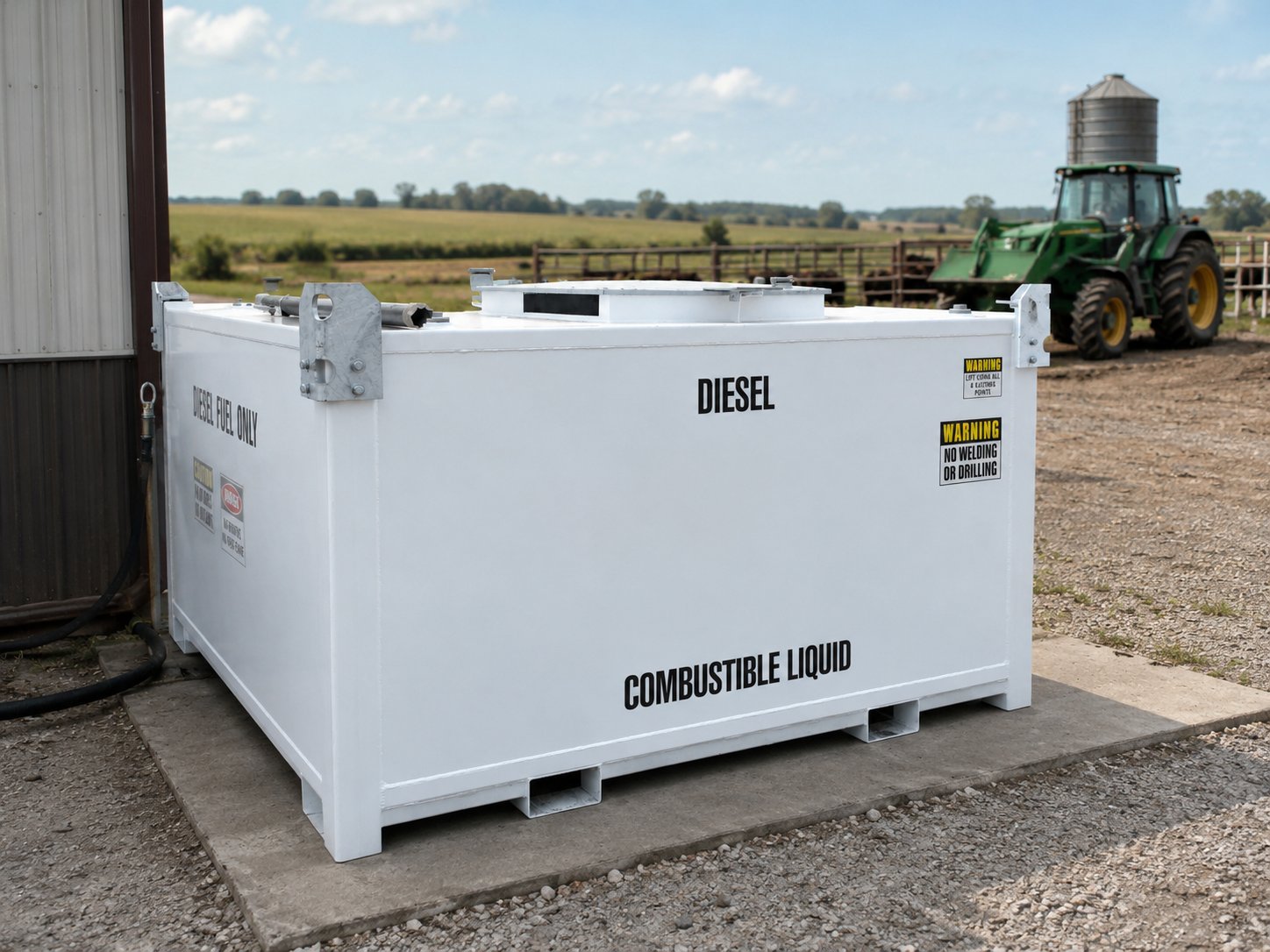
Federal SPCC baseline
The federal SPCC rule (40 CFR Part 112) applies to non-transportation-related facilities storing oil aboveground above regulatory thresholds. As a general rule, a facility with more than 1,320 gallons of aggregate aboveground oil storage capacity — counting every container 55 gallons or larger — falls within SPCC's scope. Facilities that trigger SPCC must develop a written Spill Prevention, Control, and Countermeasure Plan, meet secondary containment requirements sized for the largest tank plus precipitation freeboard, and in many cases certify the plan through a licensed Professional Engineer.
Tank capacity, containment configuration, and siting are usually the first design decisions that determine how straightforward the rest of SPCC compliance will be — get these wrong at the sourcing stage and a containment retrofit later gets expensive fast.
Oregon fire code & state oversight
Oregon runs a more centralized process than most of your other states. The Oregon State Fire Marshal's Technical Services Code Unit directly reviews plans and issues installation approval permits for flammable and combustible liquid storage tanks of 1,000 gallons or more (single tank or aggregate), and for LPG tanks above 2,000 gallons or aggregate LPG capacity above 4,000 gallons, under the 2022 Oregon Fire Code (International Fire Code-based) Section 6101.3. Tanks below those thresholds still have to meet Oregon Fire Code installation requirements — they're just not routed through the same state-level plan review.
Separately, Oregon DEQ's Tanks Program takes jurisdiction where a facility transfers 10,000 gallons or more of petroleum over waters of the state (a DEQ-approved spill contingency plan is required), where a reportable spill or release has occurred, or where gasoline is dispensed from an AST (which can require an Air Contaminant Discharge Permit). For most inland industrial and commercial buyers, the State Fire Marshal review is the primary gate; DEQ's layer applies in narrower, specific circumstances.
What State Fire Marshal review typically involves
For any tank crossing the 1,000-gallon threshold, two complete sets of plans — covering tank design, siting, setbacks, and containment — must be submitted to the Oregon State Fire Marshal for review before installation begins. Incomplete applications are rejected outright, so it's worth getting the submission right the first time rather than treating it as a formality. Once installation is complete, a final inspection with the Fire Marshal's office is required before the tank can be filled — plan for that inspection window in your project timeline, not as an afterthought once the tank is already set. Farm installations, construction projects, and vault-mounted tanks can carry their own specific provisions, so it's worth confirming your project's classification with the Fire Marshal's office directly (503-934-8204) before finalizing your tank spec.
Siting & setback considerations
The Oregon Fire Code sets minimum separation distances between fuel-dispensing tanks and buildings based on wall construction and combustibility — generally 10 feet or more from buildings with combustible exterior walls, with additional dispenser-specific setback and hose-reach rules for fueling installations. These distances interact directly with tank capacity and site layout, so confirming setbacks before you finalize a tank's footprint avoids a redesign after the Fire Marshal's plan review comes back with corrections.
Common mistakes we see in Oregon projects
Submitting an incomplete plan set to the State Fire Marshal — missing setback or containment detail is a common reason applications get rejected outright and restart the review clock.
Assuming a sub-1,000-gallon tank skips fire code review entirely — it still has to meet Oregon Fire Code installation requirements even without full state plan review.
Not budgeting time for the mandatory final inspection before the tank can be filled — this can delay a facility going operational if it isn't scheduled early.
Overlooking agricultural or farm-installation provisions that may change requirements — worth confirming facility classification with OSFM before finalizing a spec.
Typical permitting process
Confirm applicability — determine SPCC thresholds and whether your tank capacity triggers Oregon State Fire Marshal plan review.
Site & tank design review — siting, setbacks, secondary containment, and UL 142 double-wall construction, sized to your operation.
Plan submission — two complete sets of plans to the Oregon State Fire Marshal and, where applicable, DEQ.
Installation — tank set per the approved plan and Oregon Fire Code requirements.
Final inspection & commissioning — OSFM final inspection prior to filling, plus SPCC plan certification if applicable.
Requirements vary by facility type and tank capacity. Confirm current thresholds with the Oregon State Fire Marshal (503-934-8204) and DEQ's Tanks Program.
Quick Facts — Oregon
Environmental Agency
Oregon DEQ
Fire Code
Oregon Fire Code (IFC-based, NFPA 30/30A)
SPCC Trigger
Federal threshold (40 CFR 112)
Notable
State Fire Marshal plan review required at 1,000+ gal (flammable/combustible liquids)
Regional Demand Drivers
Data centers, agriculture, forestry
Sourcing a tank for an Oregon facility?
Get sizing options and compliance guidance specific to your site below.
Request a Quote
Get Oregon-specific tank guidance
We'll follow up with sizing options, lead times, and compliance guidance for your site.
FAQ
Oregon AST FAQ
What triggers SPCC for an Oregon facility?
Federal aggregate aboveground oil storage thresholds under 40 CFR 112 — DEQ can confirm applicability for your site.
Does Oregon require a separate fire marshal permit?
Larger tanks typically require State Fire Marshal or local authority review under the Oregon Fire Code, in addition to any DEQ requirements.
Are there different rules for forestry or agricultural sites?
Certain agricultural exemptions may apply; confirm your facility classification with DEQ before finalizing tank specs.
What size tank requires State Fire Marshal plan review?
Flammable and combustible liquid tanks of 1,000 gallons or more (single or aggregate) require plan submission to the Oregon State Fire Marshal. LPG requires review above 2,000 gallons per container or 4,000 gallons aggregate.
How many sets of plans does OSFM require?
Two complete sets of plans must be submitted for review before installation. Incomplete applications are rejected, so submitting full setback and containment detail up front avoids restarting the review clock.
Can I fill the tank before the final inspection?
No. A final inspection with the Oregon State Fire Marshal is required after installation and before the tank can be filled — schedule this into your project timeline in advance.