Wyoming State Guide
Aboveground Storage Tank Requirements in Wyoming
A buyer's overview of SPCC, fire code, and permitting considerations for aboveground fuel tanks in Wyoming — before you specify a system.
Federal SPCC baseline
The federal SPCC rule (40 CFR Part 112) applies to non-transportation-related facilities storing oil aboveground above regulatory thresholds. As a general rule, a facility with more than 1,320 gallons of aggregate aboveground oil storage capacity — counting every container 55 gallons or larger — falls within SPCC's scope. Facilities that trigger SPCC must develop a written Spill Prevention, Control, and Countermeasure Plan, meet secondary containment requirements, and in many cases certify the plan through a licensed Professional Engineer.
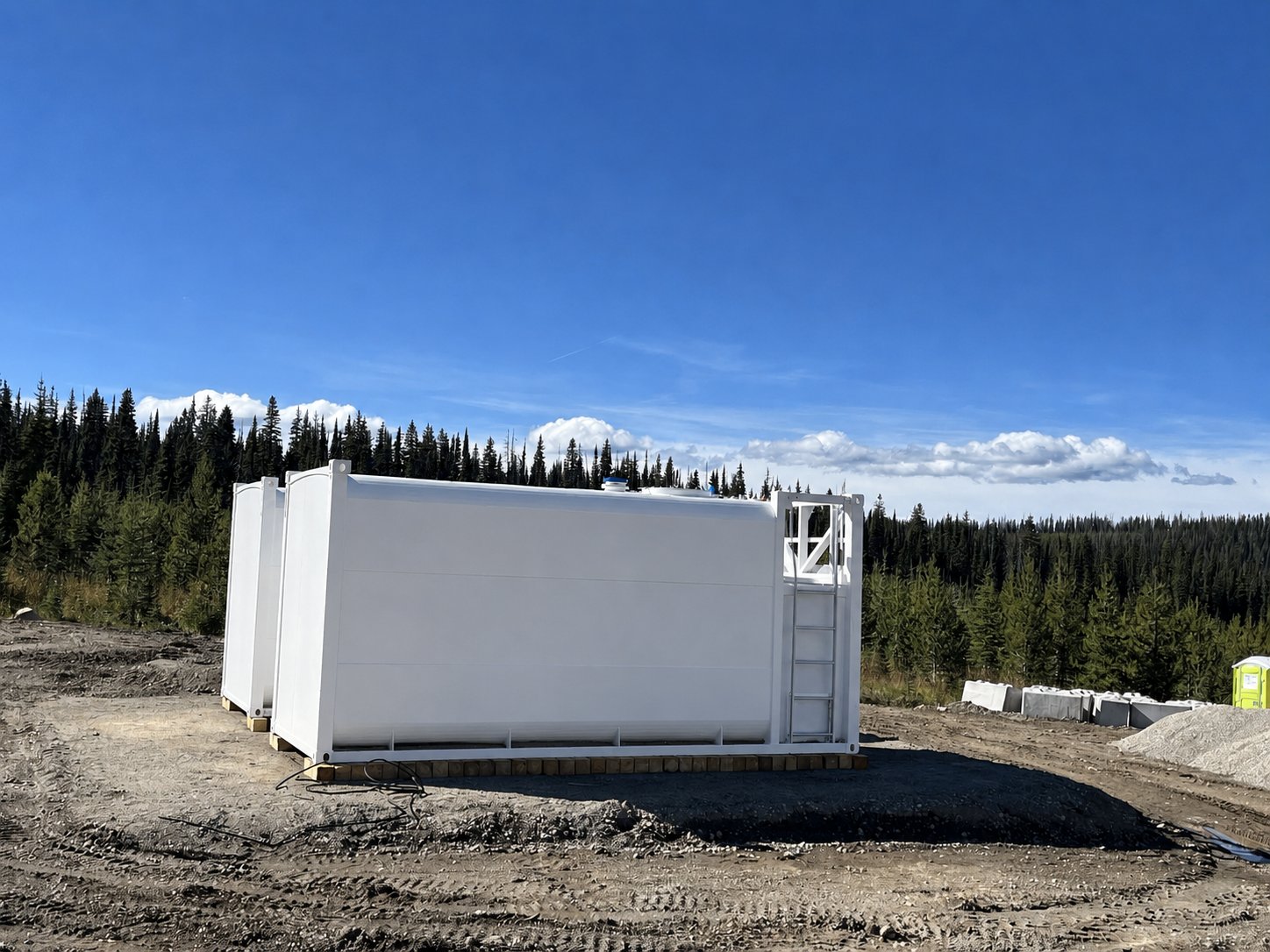
In Wyoming's energy-heavy operating environment, tank density on a single site often makes this a multi-tank system question rather than a single-tank one — aggregate capacity across a manifolded system crosses SPCC thresholds faster than buyers coming from lighter-demand states typically expect.
Wyoming's state AST rules are narrower than you'd expect
This is worth knowing precisely: Wyoming's dedicated aboveground storage tank regulations (under W.S. 35-11-1415) apply specifically to aboveground tank systems used by a dealer to dispense gasoline or diesel to the public — retail fueling, in other words. For industrial, commercial, and most oilfield-support tanks that aren't public-facing dispensing operations, that state-specific AST chapter generally doesn't apply directly. Wyoming DEQ's Storage Tank Program is primarily built around underground storage tanks, not general AST oversight.
That means for most of the tanks you'll be sourcing across this territory, the operative requirements come from two other places: OSHA (29 CFR 1910.106) if the tank holds flammable or combustible liquids — a worker-safety framework, not an environmental one — and the local fire code adopted by the county or municipality where the site sits, typically the International Fire Code referencing NFPA 30/30A (and NFPA 58 for LPG).
What local review can involve
Local requirements vary by county — Teton County, for example, requires compliance with the current International Fire Code and applicable NFPA standards, building department permitting prior to installation, a Fire Department inspection before the tank is covered or backfilled, and coordination with the Planning and Engineering Departments (including a Floodplain Development Permit) if the site sits within a 100-year floodplain. Not every Wyoming county runs an identical process, but this is representative of the layers worth checking early: fire code compliance, building department permit, fire department inspection, and floodplain review where applicable.
Common mistakes we see in Wyoming projects
Assuming Wyoming DEQ directly regulates an industrial or oilfield-support AST — the state's dedicated AST chapter is scoped to public dispensing, so most projects route through OSHA and local fire code instead.
Underestimating aggregate SPCC capacity on a manifolded multi-tank site, since Wyoming's energy-sector demand pushes total capacity higher than buyers coming from other states expect.
Missing a county-specific floodplain review requirement on sites near waterways, which can stall a project after the tank is already ordered.
Typical permitting process
Confirm applicability — determine SPCC thresholds (aggregate across multi-tank systems) and whether OSHA 1910.106 applies to your stored liquids.
Site & tank design review — siting, setbacks, secondary containment, and UL 142 double-wall construction, sized for potential manifolded systems.
Permit submission — application to the local building department and fire authority, plus floodplain review where applicable.
Inspection & commissioning — fire department inspection, tank commissioning, and SPCC plan certification if applicable.
Requirements vary significantly by county in Wyoming. Confirm current requirements with your local fire authority and building department.
Quick Facts — Wyoming
State AST Chapter
Scoped to public fuel dispensing only (W.S. 35-11-1415)
Fire Code
Locally adopted IFC (NFPA 30/30A/58)
SPCC Trigger
Federal threshold (40 CFR 112)
Notable
High tank density and multi-tank systems driven by the energy sector
Regional Demand Drivers
Oil & gas, mining, energy infrastructure
Sourcing a tank for a Wyoming facility?
Get sizing options and compliance guidance specific to your site below.
Request a Quote
Get Wyoming-specific tank guidance
We'll follow up with sizing options, lead times, and compliance guidance for your site.
FAQ
Wyoming AST FAQ
Why does Wyoming often need multi-tank systems?
High energy-sector fuel demand on a single site frequently exceeds what a single tank can efficiently support, making manifolded multi-tank systems common.
Does Wyoming DEQ regulate my industrial AST directly?
Generally no. Wyoming's dedicated AST statute applies to tanks dispensing fuel to the public; most industrial and oilfield-support tanks route through OSHA (if flammable/combustible) and local fire code instead.
Does the fire authority get involved in energy-sector tank installs?
Yes — the local fire authority and building department review tank listing, containment, and siting under the locally adopted fire code regardless of industry.
Is floodplain review required for Wyoming tank installations?
It can be, depending on the county and whether the site sits within a mapped floodplain — confirm with the local planning or engineering department early in siting.