Washington State Guide
Aboveground Storage Tank Requirements in Washington
A buyer's overview of SPCC, fire code, and permitting considerations for aboveground fuel tanks in Washington — before you specify a system.
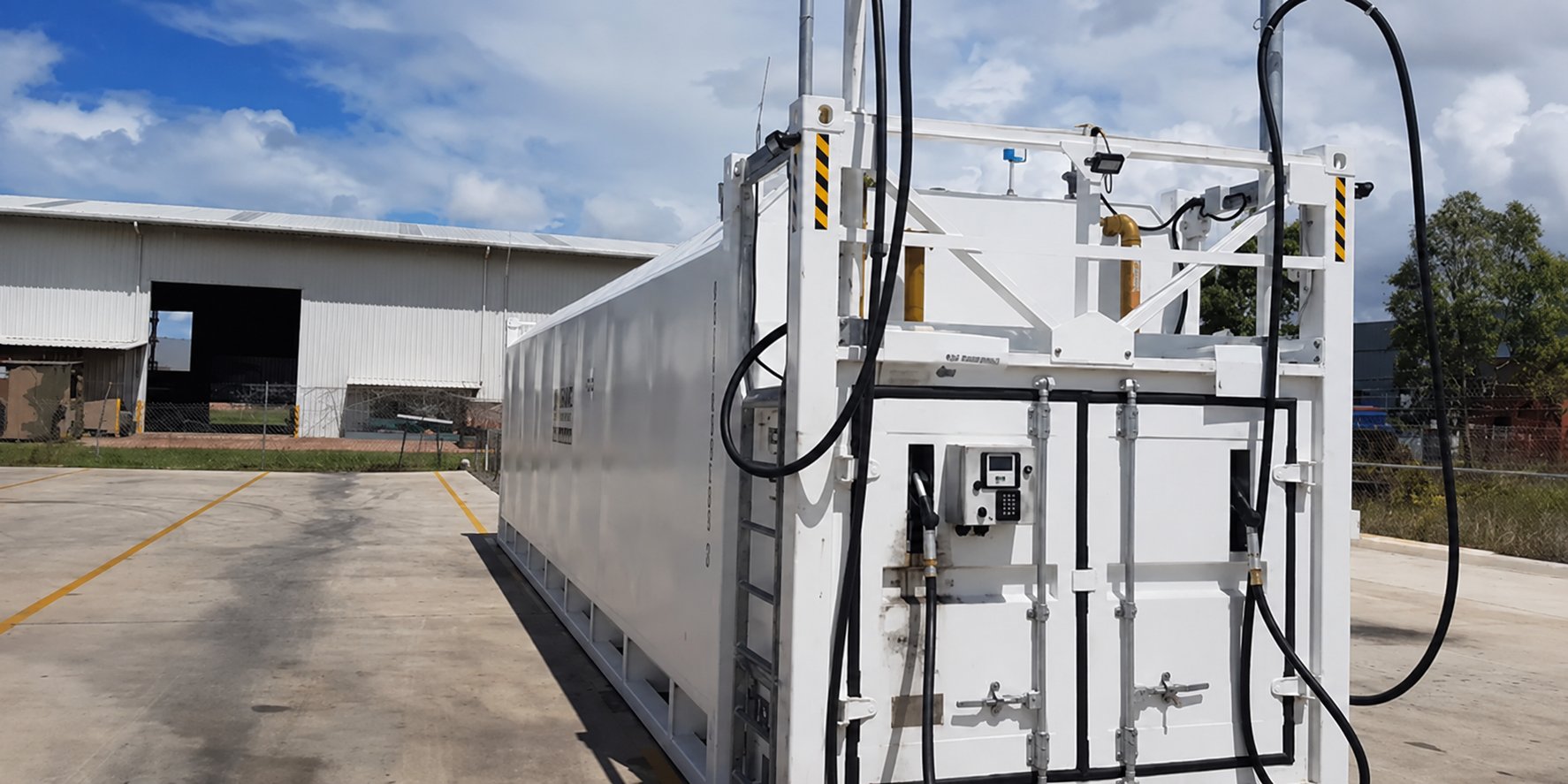
Federal SPCC baseline
The federal SPCC rule (40 CFR Part 112) applies to non-transportation-related facilities storing oil aboveground above regulatory thresholds. As a general rule, a facility with more than 1,320 gallons of aggregate aboveground oil storage capacity — counting every container 55 gallons or larger, including drums — falls within SPCC's scope, regardless of how many individual tanks that total is spread across. Facilities that trigger SPCC must develop a written Spill Prevention, Control, and Countermeasure Plan, implement secondary containment sized to hold the capacity of the largest tank plus freeboard for precipitation, and in many cases have that plan certified by a licensed Professional Engineer.
Tank capacity, containment configuration, and siting are usually the first design decisions that determine how straightforward the rest of SPCC compliance will be — get these wrong at the sourcing stage and you're often looking at a costly containment retrofit later. This is the stage where we help buyers avoid that.
Washington fire code & state oversight
Washington does not maintain a blanket state-level registration or licensing requirement for aboveground storage tanks the way it does for underground tanks. Instead, oversight splits two ways. Most AST installations are regulated under NFPA 30 (and NFPA 30A for fueling operations), adopted through the Washington State Fire Code, with tank listing (UL 142), secondary containment, setbacks, and venting reviewed and permitted by the local fire marshal or fire district with jurisdiction over your site — this is a city, county, or fire district process, not a state one, so requirements and turnaround times vary by jurisdiction.
Separately, the Washington State Department of Ecology's Spill Prevention, Preparedness, and Response Program takes jurisdiction over larger facilities — aboveground petroleum tanks of 10,000 gallons or more at a Class 1 oil handling facility fall under Ecology's oversight in addition to local fire code review, with additional requirements for an operations manual, operator training and certification, and spill contingency planning. If your project is in that size range, plan for both tracks running in parallel, not sequentially.
What local AHJ review typically involves
Because permitting runs through your local Authority Having Jurisdiction rather than a single statewide office, the exact steps vary — but the shape of the process is consistent across most Washington jurisdictions. You'll typically submit a permit application with a site plan showing tank placement, property line and building setbacks, and secondary containment design; the fire marshal's office reviews that submission against the adopted State Fire Code and NFPA 30/30A before issuing a permit; installation then proceeds to the approved plan; and once construction is complete, the AHJ conducts a final fire inspection before signing off and closing the permit. No permit-required work should begin before the permit is issued — starting installation ahead of approval is one of the more common (and costly) mistakes we see.
Secondary containment & siting considerations
Both SPCC and NFPA 30 require secondary containment for aboveground tanks, but they're evaluated separately and both need to be satisfied. NFPA 30 also governs minimum separation distances between a tank and property lines, public ways, and important buildings — the applicable distance depends on tank capacity and construction type, so this is a detail to nail down during site planning, not after a tank is already on order. Double-wall UL 142 construction (like the HEDRA and BLOC lines) satisfies secondary containment intrinsically in many configurations, which is often the simpler and more space-efficient path versus building a separate berm or containment structure around a single-wall tank — particularly valuable on tighter industrial or commercial sites where berm footprint eats usable yard space.
Common mistakes we see in Washington projects
Ordering a tank before confirming local setback and containment requirements with the AHJ, then discovering the site can't accommodate the configuration as purchased.
Assuming a single statewide AST rule applies, when in practice the local fire district's interpretation of the Fire Code is what actually governs your permit.
Underestimating aggregate capacity across multiple smaller tanks and drums, then finding out mid-project that the site crosses the 1,320-gallon SPCC threshold after all.
Starting site work or tank placement before the permit is actually issued, which can trigger stop-work orders and re-inspection delays.
Typical permitting process
Confirm applicability — determine SPCC thresholds and Washington Fire Code triggers for your facility, and whether Ecology's Class 1 oversight applies.
Site & tank design review — siting, setbacks, secondary containment, and UL 142 double-wall construction, sized to your operation.
Permit submission — application with site plan to the local fire marshal and, where applicable, Ecology.
Installation — tank set per the approved plan and NFPA 30/30A construction requirements.
Final inspection & commissioning — AHJ fire final, tank commissioning, and SPCC plan certification if applicable.
Requirements vary by facility type and local jurisdiction. Confirm current thresholds and process with Ecology's Spill Prevention, Preparedness, and Response Program and your local AHJ.
Quick Facts — Washington
Environmental Agency
Dept. of Ecology
Fire Code
Washington State Fire Code (NFPA 30/30A)
SPCC Trigger
Federal threshold (40 CFR 112)
Notable
No blanket state AST registration — local fire marshal review governs most installations
Ecology Threshold
10,000+ gal at a Class 1 facility
Regional Demand Drivers
Ports, marine terminals, data centers, timber & ag processing
Sourcing a tank for a Washington facility?
Get sizing options and compliance guidance specific to your site below.
Request a Quote
Get Washington-specific tank guidance
We'll follow up with sizing options, lead times, and compliance guidance for your site.
FAQ
Washington AST FAQ
Does SPCC apply to my Washington facility?
If your facility has more than 1,320 gallons of aggregate aboveground petroleum storage (or otherwise meets the federal threshold), SPCC likely applies — confirm exact figures with Ecology.
Who issues the fire permit for an AST in Washington?
Typically the local fire marshal or fire district with jurisdiction over your site, applying the Washington State Fire Code.
Do I need a Professional Engineer for my tank installation?
Facilities that trigger SPCC often need PE certification of the SPCC plan; check with Ecology and your engineer of record.
Does Washington have a single statewide AST permit?
No. Washington does not require blanket state registration or licensing of ASTs. Permitting runs through your local fire marshal or fire district, with Ecology adding a separate layer of oversight for larger Class 1 facilities.
How long does AST permitting typically take in Washington?
Timelines vary by jurisdiction since review is handled locally, not by a single state office. Submitting a complete site plan with setbacks and containment details up front is the biggest factor in avoiding review delays.
Does a double-wall tank satisfy secondary containment automatically?
UL 142 double-wall construction satisfies secondary containment in many configurations, but confirm against both SPCC and your local AHJ's NFPA 30 interpretation — requirements are assessed separately even when the same tank satisfies both.